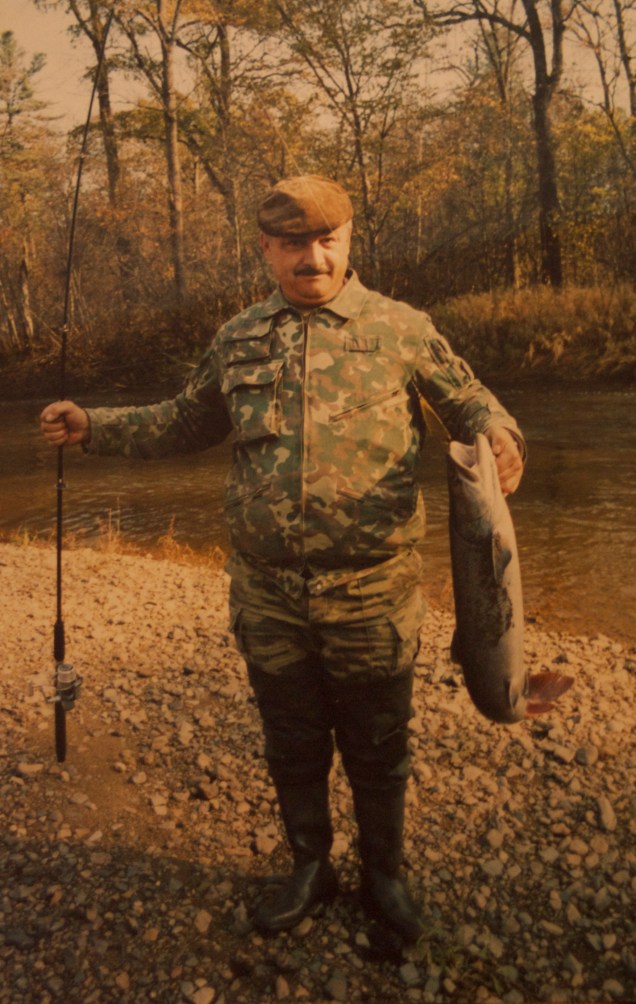
Internet access at last!

VLADIVOSTOK — We arrived here yesterday after taking a 12-hour train-ride, the last leg of the Trans-Siberian Railroad.  We’re staying with my wife’s 23-year-old niece, Dasha, and for the first time in two weeks we have access to the Internet.

 We had been living in Krasny Yar, a native village in a mountain valley in the northwest corner of Primorksi Krai. Its 680 inhabitants belong primarily to the Udegeh tribe, although several members are Nanai, the tribe of my wife.

 The village is situated on high ground on the east bank of the Bikin River. “Yar” is an old Russian word for “river bank.”  “Krasny” means “red.”  There is nothing  red here, though. The name is due to the color favored by the Soviet government, which established the village in 1957 as a settlement for native people who were scattered in the region.

  The river basin upstream from Krasny Yar forms the largest tract of virgin temperate forest in the Northern Hemisphere. The Udgeh tribe, which controls the timber rights, has fought for decades to protect the forest from loggers. Nearly 50 men in the village work in the forest as professional hunters and trappers.

 As one might suspect, there is no Internet service in the homes. While the school principal has dial-up Internet service, she has installed  a hyper-vigilant filter that blocks access to most foreign Web sites, including my e-mail sites and my blog.

 There is also no cell phone service. So in Krasny Yar, my iPhone served mainly as a flashlight for my trips to the outhouse.

 To be truthful, though, life without Internet access has been pleasant.

 But now I sit here on Dasha’s one-bedroom apartment in Vladivostok, with the Ethernet cable securely attached, and I can tell you about our trip so far.

 Let me begin were I left off, in Khabarovsk, a regional capital situated on a bend on the Amur River, which for much of its length serves a  border between Russia and China. I lived in Khabarovsk in late 1992 and 1993, working as a freelance journalist following the collapse of the Soviet Union.

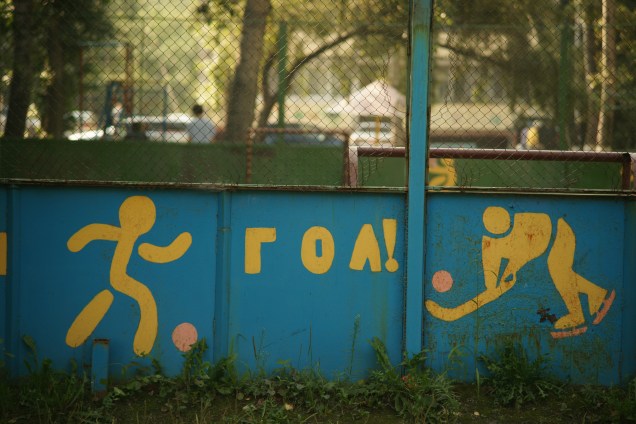
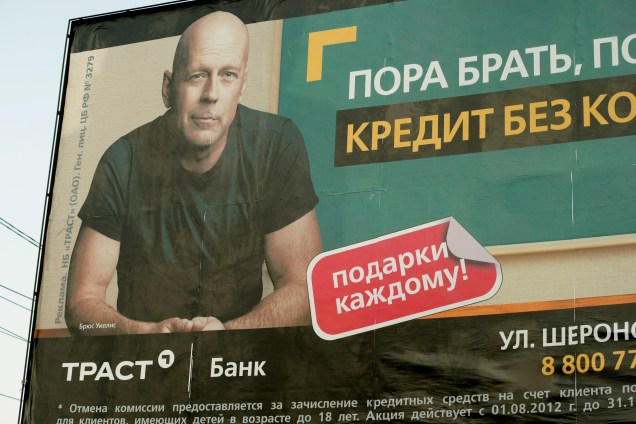
 I see some obvious differences between then and today. The communist propaganda murals are gone, replaced many times over with billboards.  Some of the newer commercial buildings are covered with advertising, and companies even use graffiti to hawk their products and services.

 Supermarkets have arrived in Khabarovsk, and several large, new apartment buildings have been built or are under construction.

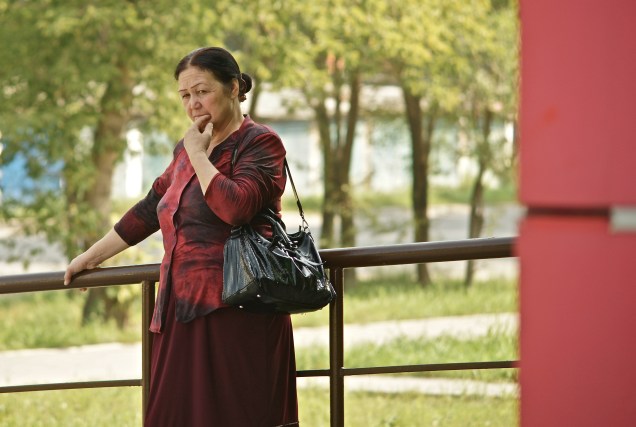
 For the most part, though, Khabarovsk’s outward appearances have changed little. Most of the city’s  600,000 residents live in grim, Soviet-era apartment buildings in various stages of decay.

 The buildings don’t have furnaces. Rather, power stations supply hot water that flows though the city via a network of huge above-ground pipes.

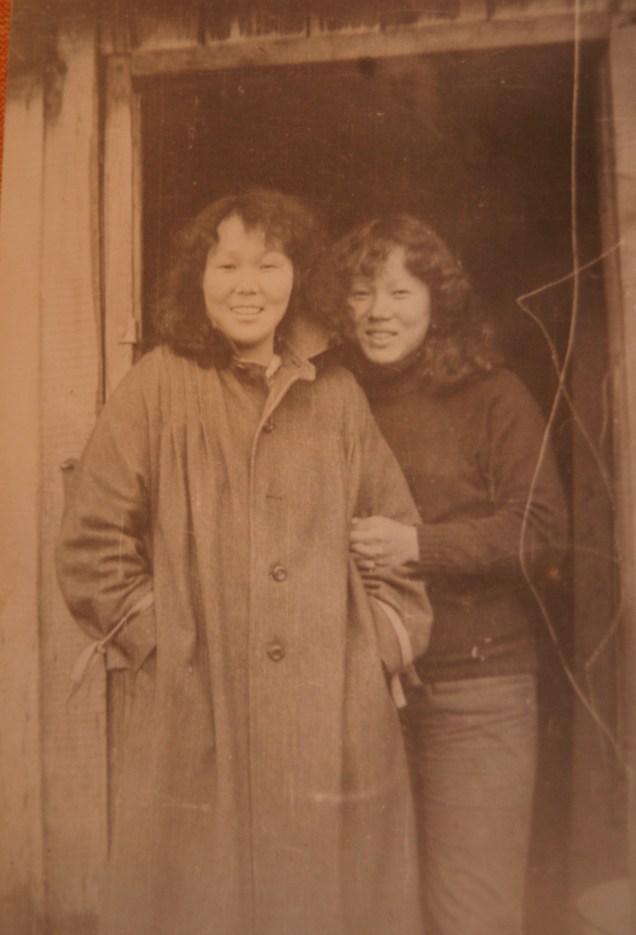
 We have been staying with my wife’s cousin, Ira. Her husband,  Vasili, was killed three years ago when a  helicopter he was piloting crashed and burned in the upper portion of the Bikin River. The helicopter’s radar system had been tampered by somebody, apparently by an enemy of a businessman who had rented it and was flying as passenger.

 Ira and her daughter Anya, have been a wonderful hostesses and have kept us well-fed with wonderful home-cooked meals.  While staying with them, I walked around the neighborhood and took some photographs. I’ll post some of them now. 
Leaving for Krasny Yar

Svetlana’s nephew, Andrea, a police man, will be taking us to Svetlana’s village, Krasny Yar, today. It’s about a four and a half hour drive on a rugged road through the forest. We are waiting for him here in the city of Khabarovsk, where we have been staying with Svetlana’s cousin, Ira.  It has been very comfortable here, as Ira loves to cook and has been feeding us great food around the clock (see Ihila’s post).

 I doubt there is any Internet access in Krasny Yar, You probably won’t here from us for a while.  We plan to be there until around Aug. 19.

Yesterday, we drove outside the city to meet Svetlanan’as brother, who was building a rustic datcha and bunya (sauna).  It was an emotional meeting because they have not seen each other in 17 years. Ihila met  his two sons, her cousins.  I took some photographs, which I will try to put on the blog before we depart for Kransy Yar. 


Russian Culture – or at least what I’ve noticed

Ihila:

I noticed quite a few differences between American culture and culture here:

1. Less organization. While getting on the flight to Khabarovsk from Moscow, my family and I had to push through crowds of impatient people. We were all going to the same place, but it was like a battle to see who gets to their airplane seats first. I felt like it was Black Friday at Walmart. 


2. Food. Here I eat soup for breakfast, lunch, and dinner. We drink tea with dessert twice a day, once after lunch and once after breakfast. Since refusing food is not polite here, we stuff ourselves sick. Our new diet is now mostly rice, meat, bread, and more meat. Vegetables and fruits are not a high priority. I miss peanut butter. I especially miss drinking water without having to boil it first and wait until it cools.

During lunch, my Dad and I discovered liver in our soup. It looked like the pig’s heart I dissected in science class. We pushed it to the side of our plate, but it was my Dad who got caught. My great aunt noticed he didn’t eat his liver, and even though he was practically done with his soup, she insisted that he have another bowl of soup. Before my great aunt noticed that I also didn’t eat my liver, I gathered it in a napkin and sneekily threw it away. I got away with it! Thank goodness I was not forced to eat another bowl of soup. I would have exploded. 


3. Nothing’s free. When my Mom and I bought water at the local grocery store, we had to pay for the plastic bag to carry it in. That wasn’t that surprising. Later that day, my family and I went to the park along the Amur River. When I went to the Port-a-potties, there was a lady sitting at her desk right in front of them. She slammed her hand on her desk and told me I had to pay. I suddenly felt I was back in elementary school being forced to pay the school bullies to use the bathroom. ‘How do I know this lady didn’t just walk up to the Port-a-potties, plop down on her desk, and force people to pay her?’ I thought. I walked to my Mom, surprised and annoyed.”This lady won’t let me use the bathroom unless I pay her. Who does she think she is?” I said. My Mom laughed and only said, “Things are different here.” She paid for me to use the Port-a-potties without a second thought. 


4. Females & Excersize. In the park along the Amur River, I went on a run to get some excersize. It occured to me that no women were running. That’s when I realized that it’s not exactly the norm for women to play sports here. As I ran past strangers, I assumed they assumed I was a Tom Boy. I felt out of place and even my great aunt and cousin thought it was a little strange that I’m into sports. I suddenly yearned to be home, running my normal route.


Gotta go. I’ve just been told it tea time. Again.  

A family portrait

A family portrait

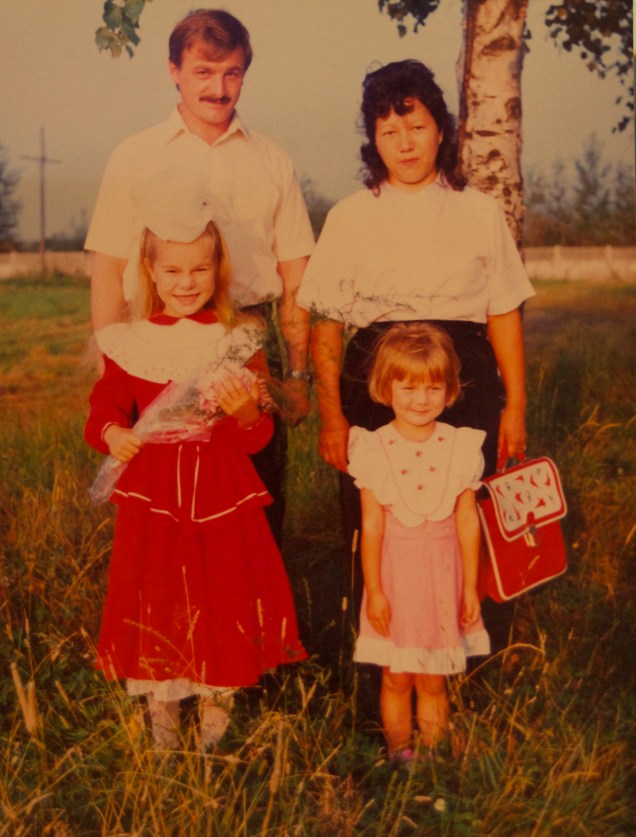
Her is Ira and her husband, Vasila, and their daughters, Olesya and Anya, taken the first day of first grade for Olesya. In Russia, the first day of school is a big holiday and children get dressed up and boys and girls bring flowers to school for the teachers.

Vasila, a helicopter pilot, was killed three years ago when his helicopter crashed. His passenger was a wealthy businessman, and somebody sabotaged the helicopter.