
Krasny Yar
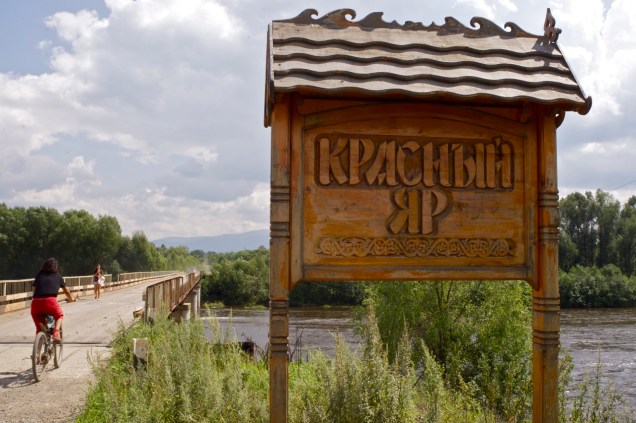
Krasny Yar is reached by crossing three bridges over the Bikin River. When I was last here 18 years ago, the bridgse did not exisit. To reach the village, people would at this point get in a small boat and travel upstream for about 300 yards.
The bridges were built in 1996. Even through Krasny Yar is now connected to the road system, the village is more isolated than before because the dirt road to the village is in much worse condition. The road is so bad that the bus from Luchegorsk, the nearest significant town, has stopped coming here. Luchegorsk is about 60 miles away, but it takes 3.5 hours to 6 hours to reach the town, depending on the ruggedness of the vehicle.
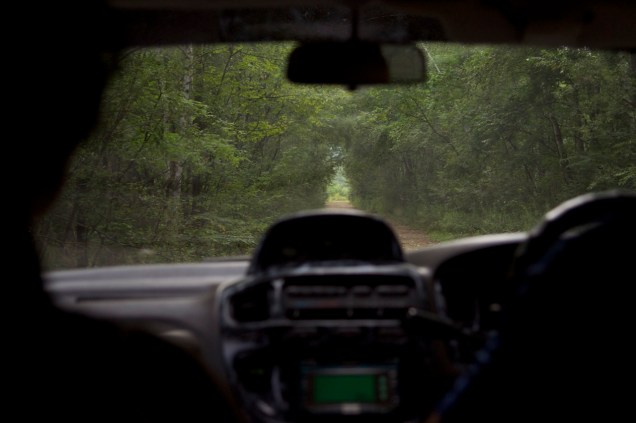
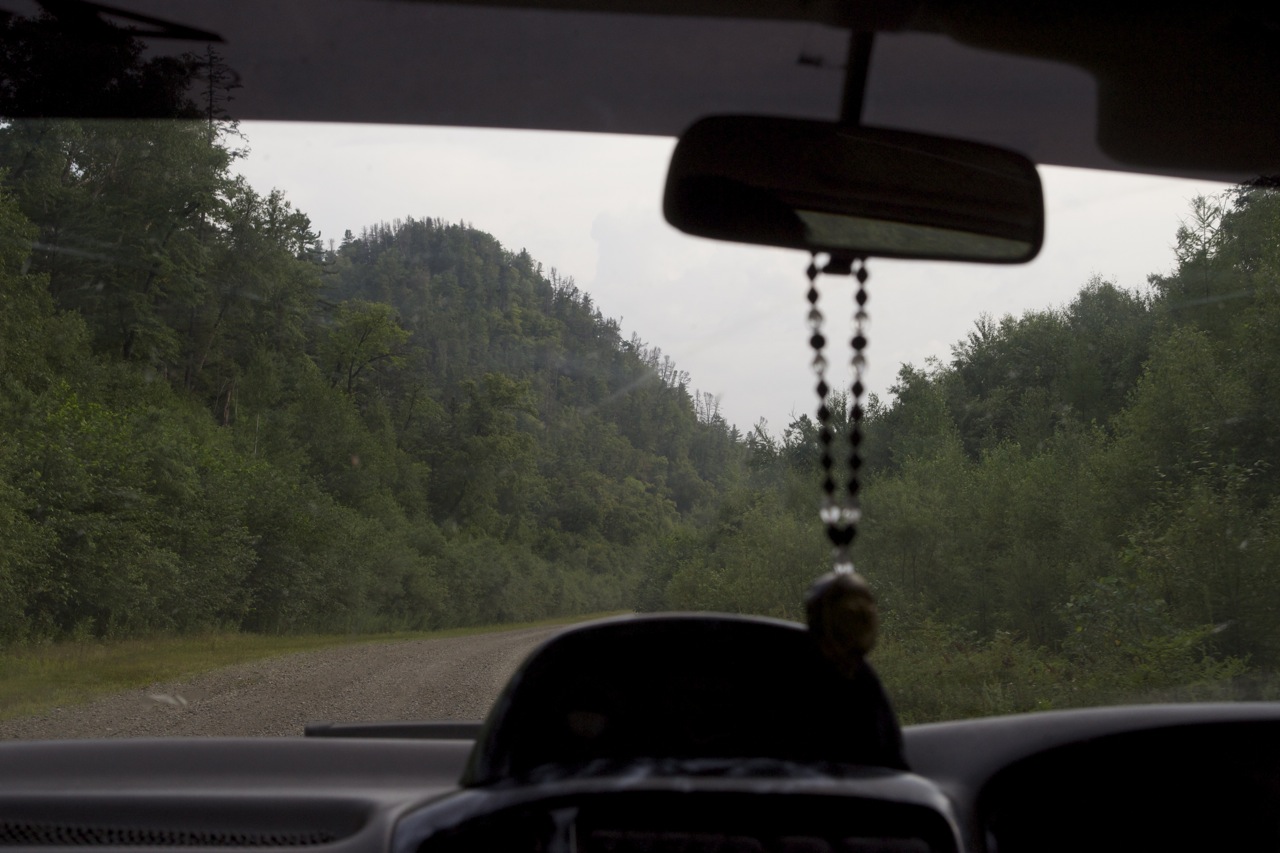
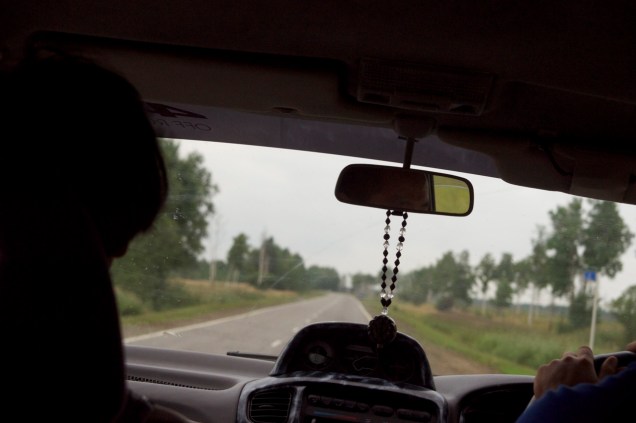

This is the vehicle we drove in
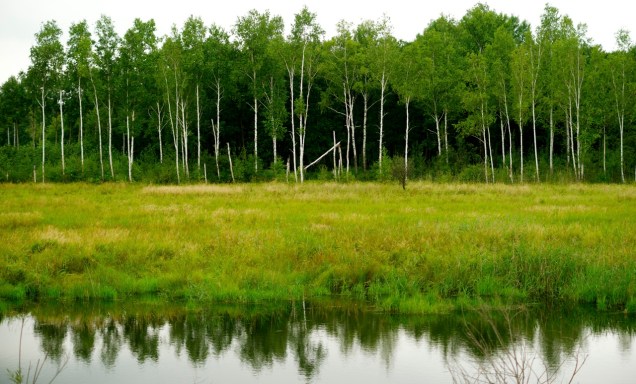
We passed many birtch trees on the way to Krasny Yar
We traveled from Khabarovsk to Krasny Yar on the “military road,” an unfinished highway that one day will connect Khabarovsk with the port city of Nahotka. The Soviets decades ago began building the highway because the existing highway between Khabarovsk and Vladivostok is seen as vulnerable to a Chinese attack due to its location. That highway parallels the Chinese border, separated from China by only a few miles for much of its length. The Chinese could easily cut off Vladivostok, home to the Soviet Pacific Fleet, from the rest of Russia.
But the Soviets only got as far as the Bikin River. There, the highway disappears into a forest.
During our five-hour drive on the highway, we saw fewer and fewer cars as we traveled in a southeasterly direction toward the Bikin River. During the last two hours, we saw one motorcycle. The pavement gave away to gravel, and the road became increasingly bumpy. Before we got to the Bikin River, we left the highway and traveled on a dirt road to the village of Sobilina. Here, the road became much worse. It took us another hour to reach the three bridges that took across the Bikin River to the village of Krasny Yar.
Before we reached the cut-off to Sobilina, we reached the top of a hill and were able to see for the first time the mountains near Svetlana’s village. Svetlana become excited and we stopped the car to take in the view.
Svetlana spoke to me about returning to the village in this video. It’s in Russian, but here is the translation:
“Now we are getting closer to my village. It’s far, but we already see beautiful hills, beautiful countryside. The road, to tell the truth, is not very good, but travel is possible. And I left 17 years ago, and now I have grown older, and much time has gone by. I don’t know what kind of reception awaits me, or who will greet me. But believe they will be happy to see me.”
Ihila writes:
Throughout my life, I could always depend on Russian to be this secret language between my parents and I. It was nice knowing no one could understand us – especially in certain situations. Now English is our secret language, but I find myself still talking to strangers in English. I don’t mean to; I’m used to assuming everyone knows English. For example, I just ran into somebody by accident and quickly said, “Oh, sorry” to the guy. Then I realized he did not understand me. I am forced to use Russian. I can’t depend on my parents as translators.
Keeping up a conversation here is a struggle, not gonna lie. Although my listening skills are great, talking without any grammar mistakes is slow and painful. I feel stupid because I can’t express myself like I can in English. My new goal is to keep whoever I’m talking to in Russian from losing interest. I really don’t like it when people keep up in conversation not because they care but because they feel bad for me and are just trying to be polite. Usually when I speak Russian, the conversation is motivated by the desire to help me learn the language. Although that’s how it works in the class I took at Bowdoin, the real world is different. Most people want to get something out of conversation, not be practice for improving my Russian. Good conversation has always been one of my strengths and the language barrier makes me uncomforatable and awkward.
I’ve recently realized that I’ve nailed the basics of Russian and memorized certain phrases. My first impression is great, until the conversation starts. Then people realize I’m not actually fluent. These phrases mostly include my apologizing for not being able to speak well.
I’m still learning, and hopefully I’ll be more fluent by the end of the trip.
 People of the Tiger